

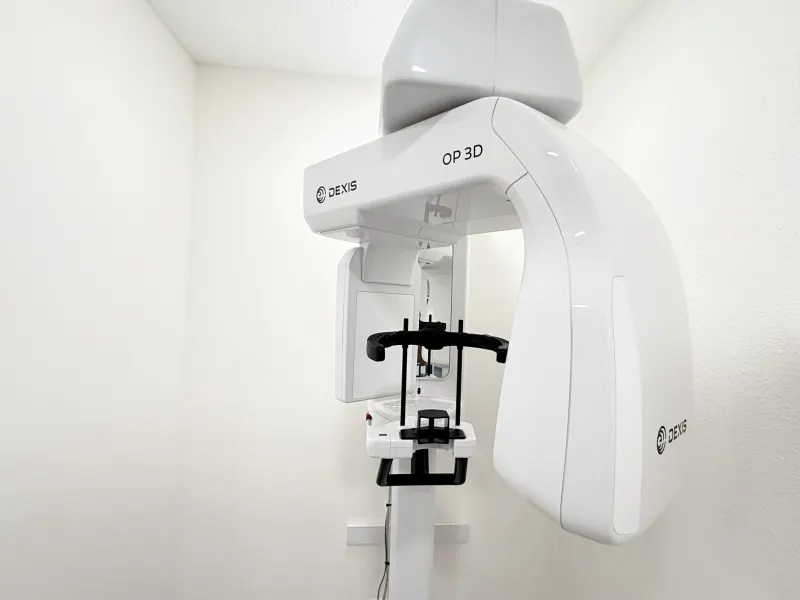
Key Facts: CBCT Interpretation Implants in Beaverton, OR at Aloha Dental Specialty Center
- ✓ What: CBCT Interpretation Implants in Beaverton, OR by our multi-disciplinary dental team
- ✓ Where: 18455 SW Alexander St, Beaverton, OR 97006
- ✓ Duration: 1–2 visits depending on complexity
- ✓ Sedation: IV, oral sedation, and nitrous oxide available
- ✓ Insurance: Delta Dental, Cigna, Aetna, MetLife + CareCredit 0% financing
- ✓ Hours: Mon–Fri 8 AM–5 PM (6 PM Thu–Fri) | Sat 8 AM–2 PM | Se habla Español
(503) 822-0096 — Schedule your consultation
How CBCT Guides Every Implant Placement at ADSC
Placing a dental implant without three-dimensional imaging is like drilling a foundation without a soil survey. The CBCT volume shows bone height from crest to nerve canal, bone width from buccal to lingual plate, bone density at the exact proposed insertion site, and the position of the maxillary sinus relative to posterior implant sites. Dr. Walied Eldomiaty measures these dimensions digitally before selecting the implant diameter, length, and angulation — eliminating the intra-operative surprises that can complicate cases planned on two-dimensional radiographs alone.
At ADSC, implant-focused CBCT interpretation goes beyond taking measurements. The data is imported into guided surgery software where the implant is virtually placed in the optimal prosthetic position — meaning the implant is positioned to support the final crown, bridge, or denture, not just wherever the bone happens to be thickest. If bone volume is insufficient, the scan reveals whether ridge augmentation, sinus lift, or guided bone regeneration is needed, and those procedures are planned simultaneously rather than discovered mid-surgery.
For referring dentists sending patients for implant evaluation, ADSC provides detailed written CBCT interpretation reports including cross-sectional views of each proposed implant site, nerve-tracing annotations, sinus proximity measurements, and a preliminary surgical plan. DICOM exports and annotated images can be shared digitally, making it easy for the restorative dentist to coordinate the prosthetic phase with the surgical plan.
Serving Beaverton, Aloha, Hillsboro & Washington County
Aloha Dental Specialty Center is located at 18455 SW Alexander St, Suite B, in Beaverton, Or Oregon. We serve patients from across the Tualatin Valley and greater Portland metro, including Aloha, Hillsboro, Tigard, Lake Oswego, and Tualatin. Our Beaverton office is a 5-minute drive from Aloha, 10 minutes from Hillsboro, and 15 minutes from Tigard via SW 185th Avenue.
-
📍
Intel Campuses (Ronler Acres & Jones Farm)
10 to 15 minutes via NW 185th Ave. We accommodate the schedules of tech professionals who need efficient, high-quality specialty care.
-
📍
Nike World Headquarters
About 8 minutes via SW Baseline Rd. We frequently see patients from the Nike campus for surgical and implant procedures with sedation options.
-
📍
Streets of Tanasbourne & Orenco Station
Easily accessible via US-26 and NW 185th. Local general dentists in these communities regularly refer patients to us for specialty procedures.
Why Local Dentists Refer to Us
We work as a trusted partner to general dentists throughout the Tualatin Valley. When cases require CBCT-guided planning, IV sedation, bone grafting, or other advanced procedures, local providers refer to Dr. Ostovar for his experience with implant procedures and predictable results.
We handle the procedures within our scope and coordinate closely with your general dentist for seamless continuity of care from start to finish.
Office hours: Mon–Fri 8 AM–5 PM (Thu & Fri until 6 PM), Sat 8 AM–2 PM
Understanding Your Investment
At Aloha Dental Specialty Center, we provide transparent pricing before any treatment begins. The cost of your procedure depends on clinical complexity, materials used, and sedation requirements. We walk you through every line item during your consultation so there are no surprises.
What Affects Cost:
- Clinical Complexity: Bone loss, sinus proximity, nerve involvement, or the need for grafting affects treatment planning and surgical time.
- Materials: We use research-backed implant systems, purified bone graft matrices, and high-strength ceramics from established manufacturers.
- Sedation: Options range from local anesthesia to IV sedation, each with different associated costs. We discuss the best option for your comfort and procedure.
Insurance & Financing
We accept most major dental insurance plans and file claims on your behalf. Our team verifies your benefits before treatment and submits pre-treatment estimates with clinical documentation to maximize coverage.
For out-of-pocket costs, we partner with CareCredit and Cherry for flexible payment plans. We also offer our ADSC Dental Savings Plan for patients without insurance.
Recovery & Healing Timeline
Understanding the healing process helps you plan ahead and follow post-operative instructions for the best possible outcome.
First 48 Hours
Mild swelling and tenderness are normal. Apply ice packs in 20-minute intervals and take prescribed or over-the-counter anti-inflammatory medication. Eat soft foods and avoid the surgical site when chewing.
Days 3 to 7
Swelling peaks around day three and then improves. The tissue begins closing over the surgical site. Continue with soft foods and use any prescribed antimicrobial rinse. Most patients return to normal activities during this phase.
Long-Term Healing
Surface tissue heals within two to three weeks. Bone integration and deep healing continue for three to six months. Avoid smoking, follow up as scheduled, and maintain good oral hygiene throughout recovery.
Questions during recovery? Call us at (503) 822-0096. We are available for post-operative concerns.
The Role of CBCT Data in Implant Treatment Planning
Successful implant osseointegration depends on primary stability at placement — which requires adequate bone in all three dimensions around the fixture. CBCT cross-sections allow measurement of available bone to within 0.1 millimeter accuracy, identification of Type I through Type IV bone density using Hounsfield-correlated grayscale values, and detection of anatomical variants such as a bifid mandibular canal, a low-positioned anterior loop of the mental nerve, or Schneiderian membrane thickening that would complicate a sinus lift. Studies published in the International Journal of Oral and Maxillofacial Implants have demonstrated that CBCT-guided implant placement reduces the incidence of nerve injury by up to 90 percent compared to freehand placement guided by panoramic radiography alone.
Why Choose ADSC?
Dr. Ostovar has placed many implants over a fifteen-year career, maintaining strong long-term outcomes. His general dentist with ongoing implant continuing education represents verified proficiency in implant diagnosis, surgical technique, and prosthetic integration. Every CBCT interpretation for implant planning at ADSC is performed by Dr. Walied Eldomiaty personally — not delegated to an assistant or an automated software report. That combination of high-volume experience and case-by-case analysis is why referring dentists across Washington County send their complex implant patients to this office. Conveniently located near Beaverton, Hillsboro, and Aloha for patients searching for quality dental care near me.
Your CBCT Interpretation Implants Treatment Steps
- Consultation & Exam: Comprehensive cbct interpretation implants evaluation with CBCT 3D imaging at our Beaverton office.
- Treatment Plan: Our experienced dental team discusses your cbct interpretation implants options, timeline, and costs. We use advanced 3D imaging and evidence-based protocols across general dentistry, endodontics, and pediatric care.
- Treatment: Procedure performed with comfort options including sedation if needed.
- Follow-Up: Post-treatment monitoring and care coordination for optimal healing.
Schedule Your Appointment Today
Book a consultation with our team at Aloha Dental Specialty Center in Beaverton, OR. Call (503) 822-0096 Office hours: Monday through Friday 8 AM to 5 PM (until 6 PM Thursday and Friday), Saturday 8 AM to 2 PM. or request an appointment online.
Related Services at Aloha Dental Specialty Center:
Dental Implants · Oral Surgery · Root Canal · Invisalign · Periodontics · Pediatric · TMJ Treatment · Sedation · Cosmetic · Emergency · Sleep Apnea
What I Tell My Implant Patients
“In my experience placing many dental implants, I’ve found that the patients who do best are the ones who understand what they’re getting into. It’s not a painful procedure — most people tell me it was easier than the extraction. But it is a process. You’re looking at 3-6 months from implant placement to final crown, sometimes longer if we need to build bone first.
I won’t sugarcoat it: not every patient is a candidate right away. If you’ve had teeth missing for years, you’ve likely lost bone. That doesn’t mean you can’t get implants — it means we may need a bone graft or sinus lift first. I’d rather take the time to build a solid foundation than rush and risk failure.
The materials matter too. We use Nobel Biocare and Straumann titanium implants — these are the systems with the best long-term research behind them. For the crown, I typically recommend zirconia or e.max porcelain depending on the location in your mouth. Front teeth get a different material consideration than molars.
If you’re comparing costs, a single implant at our Beaverton office runs $3,500-$5,500 including the crown. That’s competitive for the Portland metro area, and we offer CareCredit 0% financing. Most PPO dental insurance plans now cover a portion of implant costs — our team will verify your benefits before we start.”
— Aloha Dental Specialty Center
For additional clinical information, visit the American Dental Association (ADA).
Reviewed by Dr. Walied Eldomiaty, DDS, Periodontist — March 2026. Clinical information on this page reflects current evidence-based dental practices.
Related Dental Services
Frequently Asked Questions
A two-dimensional X-ray cannot show bone width, and it distorts bone height. Implant success depends on placing a fixture within adequate bone in three dimensions while avoiding the inferior alveolar nerve, mental foramen, and maxillary sinus. CBCT provides the measurements needed to plan a safe, predictable placement.
Yes. The scan shows bone height, width, and density at every proposed implant site. If bone is insufficient, the specific deficiency — vertical, horizontal, or both — is measured so that the appropriate grafting procedure can be planned before or at the time of implant placement.
After CBCT data is used to digitally plan implant position, a custom surgical guide is 3D-printed. This guide fits over your teeth or gums and contains metal sleeves that direct the drill at the exact angle, depth, and location planned on the computer. It eliminates freehand variation and is particularly valuable for cases near nerves, sinuses, or adjacent roots.
The inferior alveolar nerve runs through a canal inside the lower jaw. On a standard X-ray, its exact position is difficult to determine due to image overlap and distortion. On a CBCT cross-section, the nerve canal is clearly visible, and the distance from the proposed implant tip to the nerve can be measured precisely. Dr. Walied Eldomiaty maintains a minimum safety margin of 2 millimeters from the nerve in all implant plans.
Bone deficiency is not a disqualification — it is a planning variable. Depending on the location and extent of the deficiency, options include ridge augmentation with bone graft material, sinus lift procedures to create space in the upper jaw, guided bone regeneration with membrane barriers, or alternative implant positioning such as tilted implants in All-on-4 protocols.
Dr. Walied Eldomiaty typically reviews the CBCT volume with you during the same appointment. The initial interpretation and discussion take 15 to 30 minutes depending on case complexity. A detailed digital surgical plan using guided surgery software may require an additional appointment for finalization, particularly for full-arch cases.
Yes. ADSC shares the surgical plan, annotated CBCT cross-sections, and proposed implant specifications with the referring or restorative dentist. This collaboration ensures that the implant position supports the planned crown or prosthesis, and that both the surgical and restorative phases are aligned from the start.
Yes. Bone density is represented by grayscale values on the CBCT volume, and while these values are not identical to Hounsfield units from a medical CT, they provide reliable relative density information. Dense cortical bone versus soft trabecular bone at the implant site influences drill protocol selection, initial torque values, and healing time before loading.
A sinus lift raises the floor of the maxillary sinus to create space for bone graft material, allowing implant placement in the upper posterior jaw where bone height is naturally limited. CBCT shows the exact sinus floor height, membrane thickness, and the presence of sinus septa — bony walls within the sinus that affect the surgical approach.
Published studies report mean deviations of 1.0 to 1.5 millimeters at the implant platform and 1.5 to 2.0 millimeters at the apex when using surgical guides fabricated from CBCT data. That level of accuracy is significantly better than freehand placement and is critical when working near vital structures.
In most cases, yes. Even a single implant must be placed with precise angulation and depth to support a functional and aesthetic crown. The CBCT scan ensures adequate bone, safe distance from the nerve or sinus, and proper alignment with adjacent teeth.
CBCT can show bone loss around an existing implant, peri-implant radiolucency suggesting lack of integration, fracture of the implant fixture, and proximity issues with adjacent structures. It is a valuable tool for diagnosing implant complications and planning salvage or removal procedures.
Bring the DICOM data on a USB drive or have the office transmit it digitally. If the scan is recent (within six months) and of adequate quality and field of view, Dr. Walied Eldomiaty can use it for planning without repeating the scan. If the resolution or coverage is insufficient, a targeted new scan may be needed.
Full-arch cases require four to six implants positioned to support an entire arch prosthesis. CBCT data allows the surgeon to identify the best available bone in the anterior jaw, plan tilted posterior implants that avoid the sinus or nerve, and design the prosthesis virtually before surgery. This level of pre-surgical planning is what makes same-day full-arch results possible.
At ADSC, the CBCT scan and its interpretation by Dr. Walied Eldomiaty are part of the implant consultation visit. The scan fee and consultation fee are itemized separately on your estimate, but both are typically completed during a single appointment. Insurance coverage for each component is verified in advance.