

Objective, Specialist-Led Dental Second Opinions in Beaverton, OR
When you are presented with a major, life-altering dental recommendation — such as extracting all of your natural teeth, undergoing extensive bone grafting, receiving full-arch All-on-4 dental implants, or investing thousands of dollars in full-mouth crowns — feeling uncertain or overwhelmed is completely natural. Major dental interventions have permanent biological, functional, aesthetic, and financial consequences.
In general medicine, seeking a second opinion before major surgery is universally considered best practice. Dentistry should be no different. At Aloha Dental Specialty Center, we provide comprehensive, unbiased specialist second opinions. Because our clinical facility unites board-certified and residency-trained specialists in periodontics, endodontics, pediatric dentistry, and comprehensive restorative dentistry under one roof, we offer an objective multi-specialty perspective free from corporate quotas or single-provider bias.
Why Seek a Second Opinion at Aloha Dental Specialty Center?
The modern dental landscape has changed dramatically over the last decade. Many practices are now owned by private equity dental service organizations (DSOs) that enforce rigid monthly production targets. In such environments, dentists are often incentivized to recommend aggressive treatments — such as extracting salvageable teeth in favor of costly full-arch implants — or to perform procedures beyond their clinical scope rather than referring to a dedicated specialist.
Here is why patients across Beaverton, Aloha, Hillsboro, and the greater Portland metropolitan area turn to our clinical team:
- Tooth Salvage Over Premature Extraction: Our primary ethical mandate is biological tooth preservation whenever clinically feasible. Natural teeth provide superior proprioception (chewing sensation), periodontal shock absorption, and alveolar bone maintenance compared to even the finest dental implants. Before you commit to having natural teeth extracted, our team evaluates advanced tooth-saving alternatives.
- Multi-Specialty Peer Review: Rather than relying on the single perspective of a solo practitioner, your case can be collaboratively reviewed by our specialized Periodontist (Dr. Walied Eldomiaty), our Dental Implant Director (Dr. Merat Ostovar), our endodontic specialists, and our experienced restorative dentists (Dr. Derek Youngblood and Dr. Jovan Gvozden).
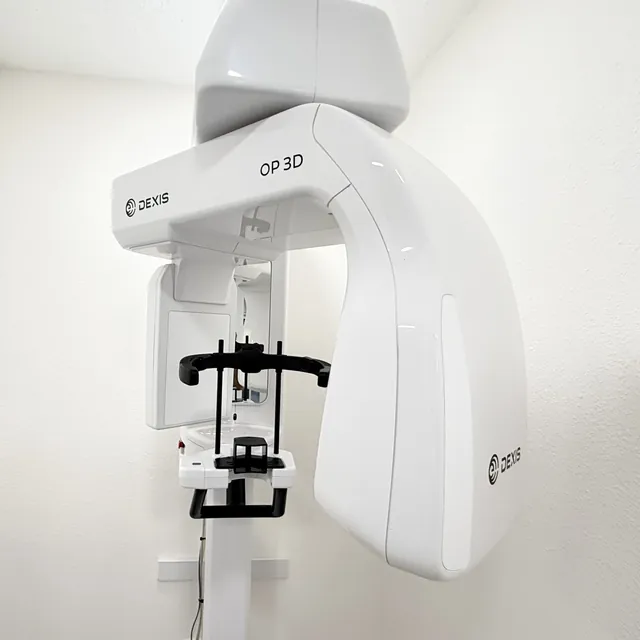
- Advanced 3D Volumetric Diagnostics: Many treatment plans are drafted from blurry, two-dimensional bitewing or panoramic X-rays that obscure critical anatomical landmarks. We utilize high-resolution 3D Cone Beam Computed Tomography (CBCT) to visualize bone width, root micro-anatomy, and nerve canals in sub-millimeter detail.
- Complete Clinical Autonomy: We operate strictly as an independent diagnostic and specialty center. We do not pressure you to book treatment, and we never criticize your prior dentist. We provide clear, objective biological facts, explain all clinical alternatives, and provide a written report so you can make an empowered decision.
The ADSC 4-Step Clinical Audit Framework
When you visit us for a second opinion consultation, we do not simply glance at your teeth and glance at an estimate. We conduct a structured, scientific clinical audit:
Step 1: Diagnostic Verification & 3D Imaging Audit
We begin by reviewing your existing treatment plan, diagnosis codes, and previous radiographs. If prior X-rays are outdated or low-resolution, we capture an on-site 3D CBCT volumetric scan. We cross-reference the proposed treatment against your actual anatomical reality, evaluating bone density, cortical plate thickness, periodontal pocket depths, and pulpal vitality.
Step 2: Biological Tooth Salvage Evaluation
If teeth were condemned for extraction due to severe decay or root infection, our endodontic team inspects the teeth under 20x surgical operating microscopes. We assess the structural "ferrule" — the height and thickness of sound natural tooth structure remaining above the alveolar crest. If at least 1.5 to 2.0 mm of intact dentin wall exists, microscopic root canal retreatment or micro-surgical apicoectomy can frequently save the natural tooth, eliminating the need for extraction and expensive bone grafting.
Step 3: Periodontal Regeneration Assessment
If teeth were slated for removal due to gum disease, mobility, or bone loss, our Periodontist evaluates the remaining periodontal architecture. In many instances, advanced laser therapy using the PerioLase® MVP-7™ (LANAP® protocol) can regenerate alveolar bone, reform periodontal ligament attachments, and stabilize loose teeth without cutting the gums or placing stitches — reversing periodontitis without tooth loss.
Step 4: Biomechanical, Aesthetic & Financial Comparison
We present a transparent comparative analysis comparing your original treatment plan with our clinical findings. We compare:
- Biological Predictability: What is the long-term scientific prognosis (5-year, 10-year, 20-year success rates) of each option based on peer-reviewed dental literature?
- Phased Treatment Options: Can treatment be prioritized into urgent functional needs vs. elective cosmetic enhancements, allowing you to spread costs over time?
- Itemized Fee Transparency: We break down ADA procedure codes, insurance coverage estimates, out-of-pocket costs, and zero-interest financing possibilities with CareCredit, Sunbit, or Cherry.
Common Treatment Plans We Audit & Re-Evaluate
1. "I was told I need all my teeth pulled for All-on-4 implants."
This is among the most frequent second opinions we perform. Patients are often quoted $40,000 to $60,000 to extract an entire arch of teeth and place immediate-load implant dentures. In many cases, we find that 6 to 8 healthy posterior and anterior teeth can be preserved with targeted restorative care or laser therapy. Retaining natural anchor teeth allows for far more conservative, less expensive treatment plans — such as individual crowns, localized fixed bridges, or single dental implants — saving thousands of dollars while protecting natural jawbone.
2. "I was told my failing root canal cannot be fixed and must be pulled."
When a previous root canal develops recurrent pain or a persistent apical abscess, general dentists frequently recommend extraction and an implant because they lack microscopic surgical tools. Under high-magnification surgical operating microscopes, our endodontic specialists can often detect missed canals (such as the MB2 canal in upper molars), remove separated instruments, bypass calcifications, and thoroughly disinfect the canal system. If the coronal seal is sound, microscopic retreatment or an apicoectomy (root-end resection) has a success rate exceeding 90%, preserving your natural root.
3. "I was told I need painful cut-and-sew gum surgery."
Traditional osseous gum surgery involves cutting the gums with a scalpel, peeling back large flaps, and cutting away diseased bone and gum tissue. This often causes significant gum recession, root sensitivity, and long-term aesthetic changes. Our specialized Periodontist, Dr. Walied Eldomiaty, offers the patented PerioLase MVP-7 LANAP procedure. LANAP uses targeted laser pulses to destroy periodontopathogens while stimulating your body's natural stem cells to regenerate new bone, cementum, and periodontal ligament fibers with zero cutting and zero sutures.
4. "I was told I do not have enough bone for dental implants."
Patients with long-standing missing teeth or wearing traditional dentures are often told by other providers that their jawbone is too thin or too close to the sinus floor for implants. With our high-resolution 3D CBCT imaging, computer-guided planning, and advanced bone grafting techniques — including piezoelectric sinus lifts, Platelet-Rich Fibrin (PRF) biologics, and angled implant placement — our team can safely place dental implants even in patients previously told they were not candidates.
What to Bring to Your Second Opinion Consultation
To maximize the value of your second opinion consultation at Aloha Dental Specialty Center, we encourage you to bring:
- Your Itemized Treatment Estimate: The written estimate from your previous dentist displaying the proposed ADA procedure codes and costs.
- Digital X-Rays & 3D Scans: Request your previous clinic to email your digital radiographs, panoramic images, or CBCT scans directly to our office or bring them on a USB flash drive. By federal HIPAA law, you have an absolute legal right to receive your radiographic records upon request.
- Current Medical & Medication List: Bring an updated list of prescription medications, particularly blood thinners, blood pressure prescriptions, or bone-density therapies (bisphosphonates).
- Dental Insurance Information: Bring your current dental insurance card so our financial coordinators can verify your remaining annual maximum and coverage tiers.
Frequently Asked Questions About Dental Second Opinions
Not at all. In fact, any ethical, reputable dental provider welcomes a second opinion. A doctor who discourages you from seeking an outside evaluation or pressures you to sign a contract immediately should raise a red flag. You have a legal, federally protected right under HIPAA to receive copies of all your dental records, X-rays, and diagnostic charts. Simply call their front desk and say, "Please email my current digital X-rays to me for my personal records." They are legally required to comply. Request your records.
Variations in treatment plans stem from several factors: clinician philosophy (aggressive intervention vs. conservative biological preservation), level of post-graduate specialty training, diagnostic technology (standard 2D X-rays vs. 3D CBCT scans), and corporate ownership structure. A general dentist without access to a 20x surgical microscope may recommend pulling a tooth with curved roots, whereas our Board-Certified Endodontist can save that exact same tooth. Corporate clinics with high overhead may push full-arch implants, while independent specialty practices focus on targeted tooth preservation. Why second opinions differ.
Yes! Most dental PPO insurance plans provide coverage for diagnostic consultations and examinations (such as ADA code D0140 or D0150). Furthermore, at Aloha Dental Specialty Center, we offer complimentary initial second-opinion consultations for complex dental implant and oral surgery cases. Our team checks your benefits before you arrive to ensure complete transparency. Insurance and second opinions.
A general dentist completes 4 years of dental school and manages routine dental needs. A dental specialist (such as an endodontist or periodontist) completes 2 to 3 additional years of full-time, hospital-accredited post-doctoral residency training focused exclusively on a single anatomical domain. A Board-Certified Endodontist has performed thousands of root canal procedures and passed rigorous national examinations. Getting an evaluation from a specialist ensures you receive expert-level insight on whether complex teeth can truly be salvaged. Specialist evaluation.
If our clinical findings differ from your initial diagnosis, we will clearly show you why using your 3D CBCT scans, high-resolution intraoral photography, and clinical probing measurements on large chairside monitors. We will walk you through the biological evidence supporting our assessment. You are under no obligation to proceed with treatment at our office — you can take our written evaluation back to your original dentist or use it to explore your options at your own pace. Second opinion process.
In many cases, absolutely. We frequently evaluate patients who were told that 4, 8, or all of their teeth needed to be pulled immediately. Upon specialized 3D microscopic and periodontal inspection, we often discover that several key teeth are structurally sound and can be preserved with conservative treatments like microscopic root canals, deep laser debridement (LANAP), or precision crowns. Saving even a few natural teeth provides vital jawbone stability and saves thousands of dollars. Save your natural teeth.
We prioritize second opinions for patients facing imminent surgical dates or active tooth pain. If you have an extraction or major implant procedure scheduled in the coming days and are feeling uneasy, call our office directly at (503) 822-0096. We make every effort to fit you in for a same-day or next-day diagnostic review so you have complete clarity before undergoing irreversible surgery. Get clarity before surgery.
If you choose to complete your care with our team, we will seamlessly coordinate all clinical phases under one roof. Our front desk handles all insurance pre-authorizations, treatment scheduling, and coordination with your general dentist if you plan to return to them for your routine cleanings and checkups. We make your transition effortless, transparent, and completely stress-free. Proceed with treatment.