

Key Facts: Oral Surgery at ADSC
- ✓ What: Oral Surgery by our multi-disciplinary dental team
- ✓ Where: 18455 SW Alexander St, Beaverton, OR 97006
- ✓ Duration: 1-2 visits depending on complexity
- ✓ Sedation: IV, oral, and nitrous oxide available
- ✓ Insurance: Delta Dental, Cigna, Aetna, MetLife + CareCredit 0% financing
(503) 822-0096 — Schedule your consultation
When Your Dental Problem Requires a Surgical Solution
Not every dental problem resolves with a filling or a crown. When teeth are deeply impacted, bone has deteriorated, infections have spread beyond the tooth root, or structural abnormalities compromise your jaw — surgical intervention becomes the definitive path forward. At Aloha Dental Specialty Center, oral surgery is not a sideline service. It is a core discipline performed daily by surgeons who trained specifically for these procedures.
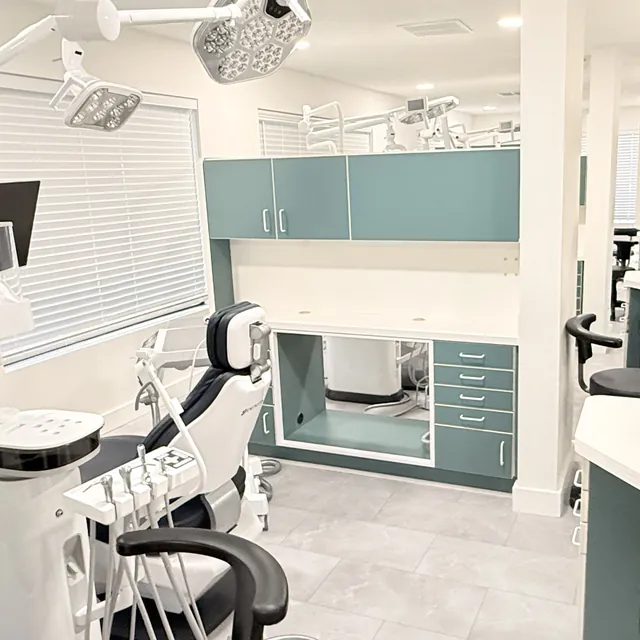
Our surgical suite in Beaverton is equipped with cone beam computed tomography (CBCT) for three-dimensional visualization of nerve canals, sinus anatomy, and bone density before any incision is made. Dr. Merat Ostovar, who holds an extensive implant training and brings over extensive implant experience, plans each case digitally — mapping osteotomy paths, identifying the inferior alveolar nerve, and calculating bone volume with sub-millimeter precision. This is not guesswork. Every cut has a plan behind it.
From straightforward extractions to full ridge reconstruction, the procedures performed here share one principle: tissue preservation. We use platelet-rich fibrin (PRF) derived from your own blood to accelerate healing, minimize post-operative swelling, and reduce the risk of dry socket. Whether you need a single wisdom tooth removed or a complex bone grafting sequence before implant placement, this practice handles the full scope of dentoalveolar surgery under one roof — with IV sedation available for patients who need it.
Dr. Ostovar’s Clinical Perspective on Oral Surgery
“I’ve found that successful Oral Surgery outcomes depend on three factors: precise diagnosis with 3D imaging, evidence-based treatment planning, and honest communication with the patient about what to realistically expect. At Aloha Dental Specialty Center, we invest the time to get each of these right. Every patient receives a thorough evaluation with our CBCT cone beam scanner before we discuss any treatment options.”
— Aloha Dental Specialty Center, General Dentist with Dental Implant Focus
For more information on dental health standards, visit the American Dental Association (ADA).
Serving Beaverton, Aloha, Hillsboro & Washington County
Aloha Dental Specialty Center is located at 18455 SW Alexander St, Suite B, in Beaverton, Or Oregon. We serve patients from across the Tualatin Valley and greater Portland metro, including Aloha, Hillsboro, Tigard, Lake Oswego, and Tualatin. Our Beaverton office is a 5-minute drive from Aloha, 10 minutes from Hillsboro, and 15 minutes from Tigard via SW 185th Avenue.
-
📍
Intel Campuses (Ronler Acres & Jones Farm)
10 to 15 minutes via NW 185th Ave. We accommodate the schedules of tech professionals who need efficient, high-quality specialty care.
-
📍
Nike World Headquarters
About 8 minutes via SW Baseline Rd. We frequently see patients from the Nike campus for surgical and implant procedures with sedation options.
-
📍
Streets of Tanasbourne & Orenco Station
Easily accessible via US-26 and NW 185th. Local general dentists in these communities regularly refer patients to us for specialty procedures.
Why Local Dentists Refer to Us
We work as a trusted partner to general dentists throughout the Tualatin Valley. When cases require CBCT-guided planning, IV sedation, bone grafting, or other advanced procedures, local providers refer to Dr. Ostovar for his experience with implant procedures and predictable results.
We handle the procedures within our scope and coordinate closely with your general dentist for seamless continuity of care from start to finish.
Office hours: Mon–Fri 8 AM–5 PM (Thu & Fri until 6 PM), Sat 8 AM–2 PM
Understanding Your Investment
At Aloha Dental Specialty Center, we provide transparent pricing before any treatment begins. The cost of your procedure depends on clinical complexity, materials used, and sedation requirements. We walk you through every line item during your consultation so there are no surprises.
What Affects Cost:
- Clinical Complexity: Bone loss, sinus proximity, nerve involvement, or the need for grafting affects treatment planning and surgical time.
- Materials: We use research-backed implant systems, purified bone graft matrices, and high-strength ceramics from established manufacturers.
- Sedation: Options range from local anesthesia to IV sedation, each with different associated costs. We discuss the best option for your comfort and procedure.
Insurance & Financing
We accept most major dental insurance plans and file claims on your behalf. Our team verifies your benefits before treatment and submits pre-treatment estimates with clinical documentation to maximize coverage.
For out-of-pocket costs, we partner with CareCredit and Cherry for flexible payment plans. We also offer our ADSC Dental Savings Plan for patients without insurance.
Recovery & Healing Timeline
Understanding the healing process helps you plan ahead and follow post-operative instructions for the best possible outcome.
First 48 Hours
Mild swelling and tenderness are normal. Apply ice packs in 20-minute intervals and take prescribed or over-the-counter anti-inflammatory medication. Eat soft foods and avoid the surgical site when chewing.
Days 3 to 7
Swelling peaks around day three and then improves. The tissue begins closing over the surgical site. Continue with soft foods and use any prescribed antimicrobial rinse. Most patients return to normal activities during this phase.
Long-Term Healing
Surface tissue heals within two to three weeks. Bone integration and deep healing continue for three to six months. Avoid smoking, follow up as scheduled, and maintain good oral hygiene throughout recovery.
Questions during recovery? Call us at (503) 822-0096. We are available for post-operative concerns.
The Biology Behind Oral Surgery
Oral surgery works within the biological framework of bone remodeling and soft tissue healing. When a tooth is extracted, a cascade of inflammatory mediators floods the socket, initiating clot formation and eventually osteoblast migration to rebuild alveolar bone. Surgical techniques that preserve the periosteum — the thin vascular membrane covering bone — dramatically improve healing outcomes because periosteal cells are a primary source of new bone formation. Modern adjuncts like PRF concentrate growth factors (PDGF, VEGF, TGF-beta) at the surgical site, accelerating angiogenesis and collagen deposition. Understanding this biology is what separates a routine extraction from a procedure that sets you up for long-term oral health.
Why Choose ADSC?
Oral surgery demands training that goes far beyond general dentistry. The proximity of critical structures — the inferior alveolar nerve, the maxillary sinus, the mental foramen — means that millimeters matter. Dr. Ostovar's fellowship training through the International Congress of Oral Implantologists included advanced surgical protocols for bone augmentation, sinus elevation, and management of surgical complications. Choosing a experienced clinician with CBCT imaging and digital planning capability is not a luxury; it is the standard of care for predictable outcomes.
Your Oral Surgery Beaverton OR Treatment Steps
- Consultation & Exam: Comprehensive oral surgery beaverton or evaluation with CBCT 3D imaging at our Beaverton office.
- Treatment Plan: Our experienced dental team discusses your oral surgery beaverton or options, timeline, and costs. We use advanced 3D imaging and evidence-based protocols across general dentistry, endodontics, and pediatric care.
- Treatment: Procedure performed with comfort options including sedation if needed.
- Follow-Up: Post-treatment monitoring and care coordination for optimal healing.
Schedule Your Appointment Today
Book a consultation with our team at Aloha Dental Specialty Center in Beaverton, OR. Call (503) 822-0096 Office hours: Monday through Friday 8 AM to 5 PM (until 6 PM Thursday and Friday), Saturday 8 AM to 2 PM. or request an appointment online.
Related Services at Aloha Dental Specialty Center:
Dental Implants · Oral Surgery · Root Canal · Invisalign · Periodontics · Pediatric · TMJ Treatment · Sedation · Cosmetic · Emergency · Sleep Apnea
What Patients Should Know
“I know oral surgery sounds intimidating — many patients tell me they’ve been putting this off for months or even years. Here’s what I want you to know: with IV sedation, you won’t remember anything. You’ll close your eyes, and the next thing you know, it’s done. Most patients say the anticipation was far worse than the reality.
Recovery depends on the complexity. For a straightforward case, you’re looking at 2-3 days of swelling managed with ice packs and ibuprofen, then gradual improvement over the following week. I recommend soft foods for 7-10 days — yogurt, scrambled eggs, mashed potatoes, smoothies. No straws, no smoking, no vigorous rinsing for at least 5 days.
I always use CBCT 3D imaging before any surgical procedure. A standard X-ray gives me a flat picture — the CT scan shows me exactly where the nerves are, what the bone looks like in three dimensions, and how to plan the safest approach. It makes a real difference in outcomes.”
— Aloha Dental Specialty Center | Oral Surgery, Aloha Dental Specialty Center
Are You a Candidate for Oral Surgery Beaverton OR?
Most patients in good general health are candidates for oral surgery beaverton or. However, certain factors may affect your eligibility or require modifications to the treatment plan:
- Medical conditions: Uncontrolled diabetes, autoimmune disorders, or blood-thinning medications may require coordination with your physician before treatment.
- Bone quality: For oral surgery beaverton or involving the jawbone, adequate bone density is essential. A CBCT 3D scan during your consultation determines this precisely.
- Smoking: Tobacco use significantly impairs healing. We strongly recommend quitting 2-4 weeks before and after any surgical procedure.
- Age: There is generally no upper age limit. What matters is your overall health, not your age. We have successfully treated patients in their 80s and 90s.
The only way to know for certain is a consultation with our team with a board-certified endodontist. Call (503) 822-0096 to schedule your evaluation — we’ll tell you honestly whether this is the right treatment for your situation.
Typical Healing Timeline:
Days 1-3: Initial healing, mild swelling managed with ice and medication. Days 4-7: Swelling subsides, gradual return to normal diet. Weeks 2-4: Soft tissue heals completely. Months 2-6: Bone remodeling and full integration (for surgical procedures). Individual recovery varies — we provide detailed post-op instructions specific to your procedure.
For additional clinical information, visit the American Dental Association (ADA).
Last reviewed: March 2026. Clinical information on this page reflects current evidence-based dental practices.
What Our Beaverton Patients Ask About Oral Surgery Beaverton OR in Beaverton, OR
At Aloha Dental Specialty Center, patients frequently ask about the timeline, cost, and recovery for Oral Surgery Beaverton OR in Beaverton, OR. Our team personally reviews each case using CBCT 3D cone-beam imaging to develop an individualized treatment plan. Most procedures are completed in one to two visits, with IV sedation, oral sedation, and nitrous oxide available for your comfort. We accept Delta Dental, Cigna, Aetna, MetLife, Guardian, and most PPO plans, with CareCredit 0% financing for 12-24 months. Recovery varies by case complexity — our team provides detailed written aftercare instructions and schedules follow-up visits. Questions? Call (503) 822-0096 — we’re open 8 AM – 5 PM weekdays (until 6 PM Thursday and Friday) and Saturdays 8 AM – 2 PM.
Our Oral Surgery Procedures
Frequently Asked Questions
We perform the full range of dentoalveolar surgery: simple and surgical extractions, wisdom teeth removal, bone grafting, sinus lifts, cyst removal, biopsies, frenectomies, tori removal, pre-prosthetic surgery, coronectomies, and emergency surgical procedures. Our team handles both routine and complex cases.
You should not feel pain during the procedure. We use local anesthesia for all surgeries, and IV sedation is available for patients who want to be completely relaxed or asleep. Most patients report that the anticipation was far worse than the actual experience. Post-operative discomfort is managed with prescribed medications and typically peaks at 48-72 hours before improving steadily.
You typically need oral surgery when a tooth cannot be restored, when bone needs to be rebuilt, when a growth or cyst requires removal, or when an infection has spread beyond what antibiotics alone can resolve. Your general dentist may refer you, or we can evaluate your situation directly with a CBCT scan during consultation.
CBCT (cone beam computed tomography) produces a three-dimensional image of your jaw, teeth, nerves, and sinuses. Unlike a standard dental X-ray, CBCT shows us the exact position of the inferior alveolar nerve, the thickness of your bone, and the proximity of tooth roots to the maxillary sinus. This allows us to plan surgery with precision and avoid complications.
PRF stands for platelet-rich fibrin. We draw a small amount of your blood before surgery, spin it in a centrifuge to concentrate the platelets and growth factors, and place this fibrin membrane directly into the surgical site. PRF accelerates clot formation, reduces inflammation, lowers dry socket risk, and promotes faster bone and soft tissue healing.
Yes. Dr. Ostovar is IV sedation certified. We offer local anesthesia, nitrous oxide (laughing gas), oral sedation, and IV sedation depending on the complexity of your procedure and your comfort level. For wisdom teeth removal, bone grafting, and longer procedures, IV sedation is a popular choice.
Recovery varies by procedure. A simple extraction typically allows return to normal activity in 1-2 days. Surgical extractions and wisdom teeth removal usually require 5-7 days of modified activity. Bone grafting procedures may take 4-6 months for the graft to fully integrate before implant placement, though surface healing occurs within 2-3 weeks.
Stick to soft foods for the first 3-5 days: yogurt, smoothies (no straw), mashed potatoes, scrambled eggs, soup (lukewarm, not hot), and applesauce. Avoid crunchy, spicy, or very hot foods. Avoid using a straw for at least one week, as the suction can dislodge the blood clot and cause dry socket.
Yes, we accept most major dental insurance plans and will file claims on your behalf. Many oral surgery procedures, particularly extractions and biopsies, are covered at least partially by dental insurance. Our front desk team will verify your benefits before your procedure so you know your estimated out-of-pocket cost.
Our surgical practice is located at 18455 SW Alexander St, Suite B, in Beaverton, Oregon. We serve patients from Beaverton, Aloha, Hillsboro, Portland, Tigard, Lake Oswego, and throughout Washington County. Many patients are referred to us by general dentists across the greater Portland metro area. Conveniently located near Beaverton, Hillsboro, and Aloha for patients searching for quality dental care near me.
If you are receiving IV sedation, do not eat or drink for 8 hours prior to your appointment. Arrange for someone to drive you home. Wear comfortable, loose-fitting clothing with short sleeves for IV access. Take any pre-operative medications as prescribed. Arrive 15 minutes early to complete paperwork.
During your consultation, we take a CBCT scan if one has not been done recently, review your medical history, examine the surgical site clinically, and discuss the diagnosis and treatment options. You will leave with a clear understanding of the recommended procedure, the timeline, sedation options, and cost.
All surgery carries some risk. Common risks include bleeding, swelling, infection, dry socket (after extractions), and temporary numbness if nerves are nearby. Serious complications are rare when surgery is performed by a trained specialist using advanced imaging. We discuss all risks specific to your procedure during the consent process.
For simple extractions, many patients return to desk work the next day. For surgical extractions, wisdom teeth removal, or bone grafting, plan on 2-3 days away from work. If your job involves heavy lifting or strenuous activity, you may need a full week. We provide specific return-to-work guidance based on your procedure.
No referral is required. You can call us directly to schedule a consultation. However, we do work closely with referring general dentists throughout the Portland and Beaverton area and are happy to coordinate care with your existing dental provider.
See an oral surgeon for impacted wisdom teeth, multiple extractions, dental implants, bone grafting, cysts or tumors, jaw surgery, or any procedure requiring IV sedation or hospital-based surgery.
Ready to Discuss Oral Surgery?
Multi-disciplinary care. CBCT 3D imaging included. Same-week appointments available.
Or request an appointment online →
18455 SW Alexander St, Suite B, Beaverton, OR 97006 | Near Intel & Orenco Station