

Fast Facts · Dental Implants in Beaverton, OR
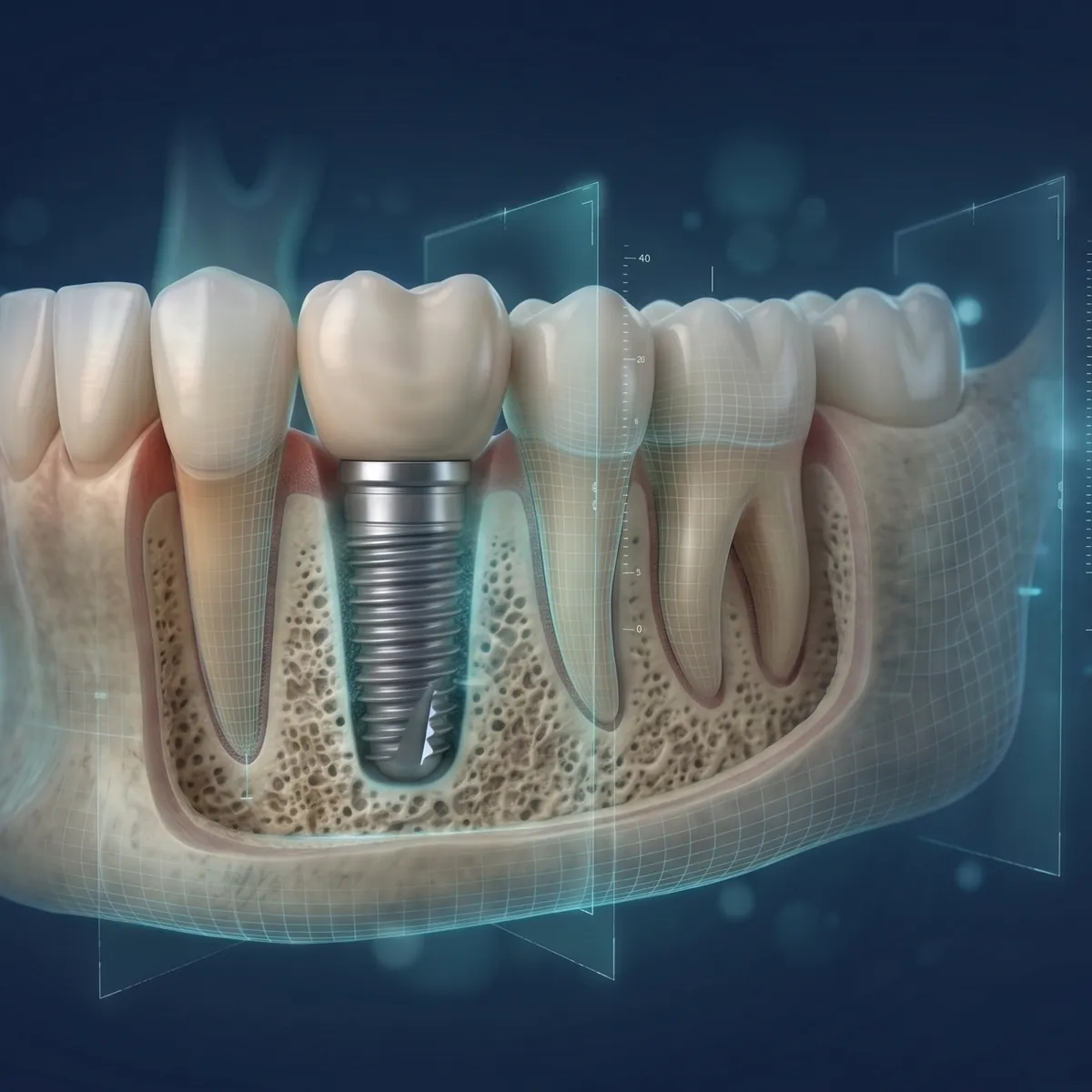
Dental implants are permanent medical-grade titanium posts surgically placed into the jawbone to replace missing or failing tooth roots. At Aloha Dental Specialty Center in Beaverton, OR, procedures are planned with 3D CBCT scans and placed by residency-trained periodontist Dr. Walied Eldomiaty, DDS and restorative director Dr. Merat Ostovar, DMD, restoring 90%+ natural bite force with custom porcelain crowns, bridges, or full-arch All-on-4 restorations.
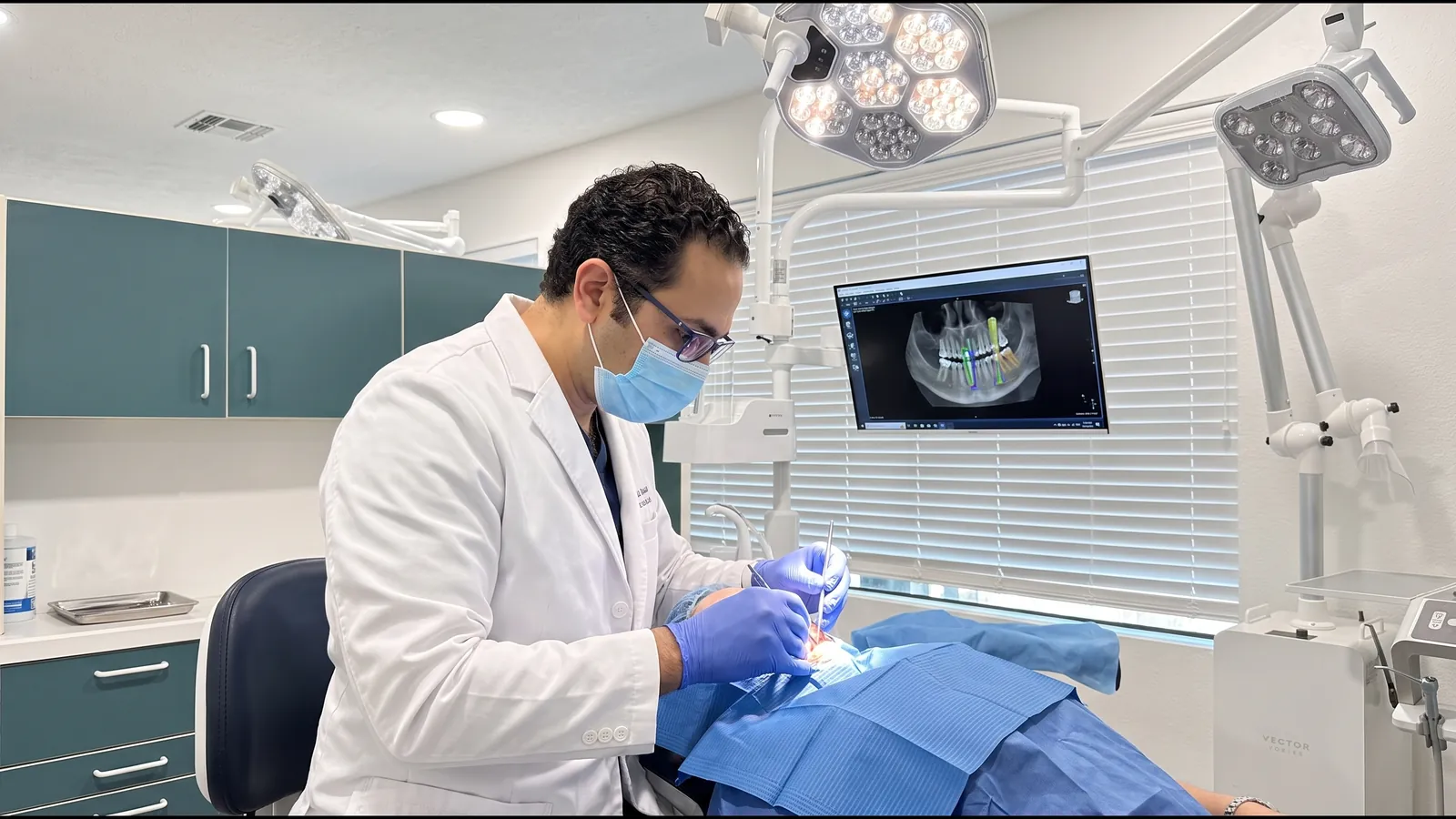
Dental implants replace missing teeth with a medical-grade titanium post that integrates directly into your jawbone, supporting a lifelike custom ceramic crown, bridge, or full-arch prosthesis. The result looks, feels, and functions like a natural tooth. For Beaverton-area patients, the choice of where to have implant surgery performed matters as much as the choice to have it done at all. At Aloha Dental Specialty Center, we plan and place implants in-house using low-dose 3D CBCT imaging, computer-guided surgical navigation, and hospital-grade IV sedation. Our multi-specialty clinical team is led by residency-trained periodontist Dr. Walied Eldomiaty, DDS and restorative implant director Dr. Merat Ostovar, DMD, delivering start-to-finish tooth replacement under one roof without third-party specialist referrals.
What are dental implants?
Dental implants replace missing teeth with a titanium post placed into the jawbone. After 3–6 months of healing (during which bone fuses to the implant), a custom-made crown is attached on top. Most patients are candidates if they have adequate bone and good general health; CBCT imaging and a consultation determine fit. At our Beaverton office, treatment ranges from single-tooth replacement to full-arch reconstruction.
Clinical Perspective: Dental Implants
“Successful dental implant outcomes depend on three factors: precise diagnosis with 3D imaging, evidence-based treatment planning, and honest communication with the patient. At Aloha Dental Specialty Center, we invest time to get each of these right.”
— Aloha Dental Specialty Center
Standards reference: American Dental Association (ADA)
Who dental implants are for
Implants work for a wide range of adults who have lost one or more teeth. We evaluate every case at consultation, but the following situations are typical:
- Adults missing one or more teeth from decay, fracture, periodontal disease, or trauma
- Patients wearing a partial denture who want a fixed alternative
- Patients with a failing bridge where the supporting teeth can be preserved
- Patients with adequate jawbone — or who are candidates for bone grafting
- Generally healthy adults; certain conditions (uncontrolled diabetes, active periodontal disease, some medications) require evaluation
- Smokers can be candidates, but the published failure rate is higher and we discuss the trade-offs honestly
If you are not sure whether you qualify, a consultation with CBCT imaging usually answers the question in a single visit.
Clinical situations we treat
Implant therapy covers a range of tooth-loss scenarios. The most common we see in our Beaverton office:
- Single missing tooth. One implant plus one crown — the most frequent case.
- Multiple adjacent missing teeth. An implant bridge uses two implants to support three or more crowns.
- Failing root canal that needs extraction. Our endodontic team evaluates whether root canal retreatment or extraction with implant placement is the better path for the specific tooth.
- Full-arch tooth loss. An implant-supported full denture (often called All-on-4 or All-on-6) restores an entire upper or lower arch on four to six implants.
- Loose or uncomfortable denture. An implant-supported overdenture snaps onto two to four implants, eliminating slippage and reducing the need for adhesive.
Implant treatments we offer
- Single-tooth implants
- Implant bridges for multiple adjacent missing teeth
- Implant-supported overdentures (snap-in dentures)
- All-on-4 and All-on-6 full-arch restoration
- Bone grafting when additional bone is needed for stable placement
- Sinus augmentation for upper-back implants when the sinus floor is low
- Same-day temporary crowns when the case is clinically suitable
How a consultation works
The first visit is a planning visit, not a procedure. We want you to leave with a written plan and a clear understanding of timeline, options, and cost before any surgical decision is made.
- CBCT 3D scan plus an intraoral scan (a digital impression that replaces traditional putty)
- Treatment-planning conversation covering timeline, restorative options, recovery, and cost
- Medical history review to flag any candidacy concerns
- Written treatment plan provided before any procedure begins
- Insurance verification and financing options reviewed
Plan on 60 to 90 minutes for the first visit. Same-day consultations are often available.
Technology we use
Modern implant placement is as much a planning problem as a surgical one. The right tools shorten chair time and lower the risk of surprises.
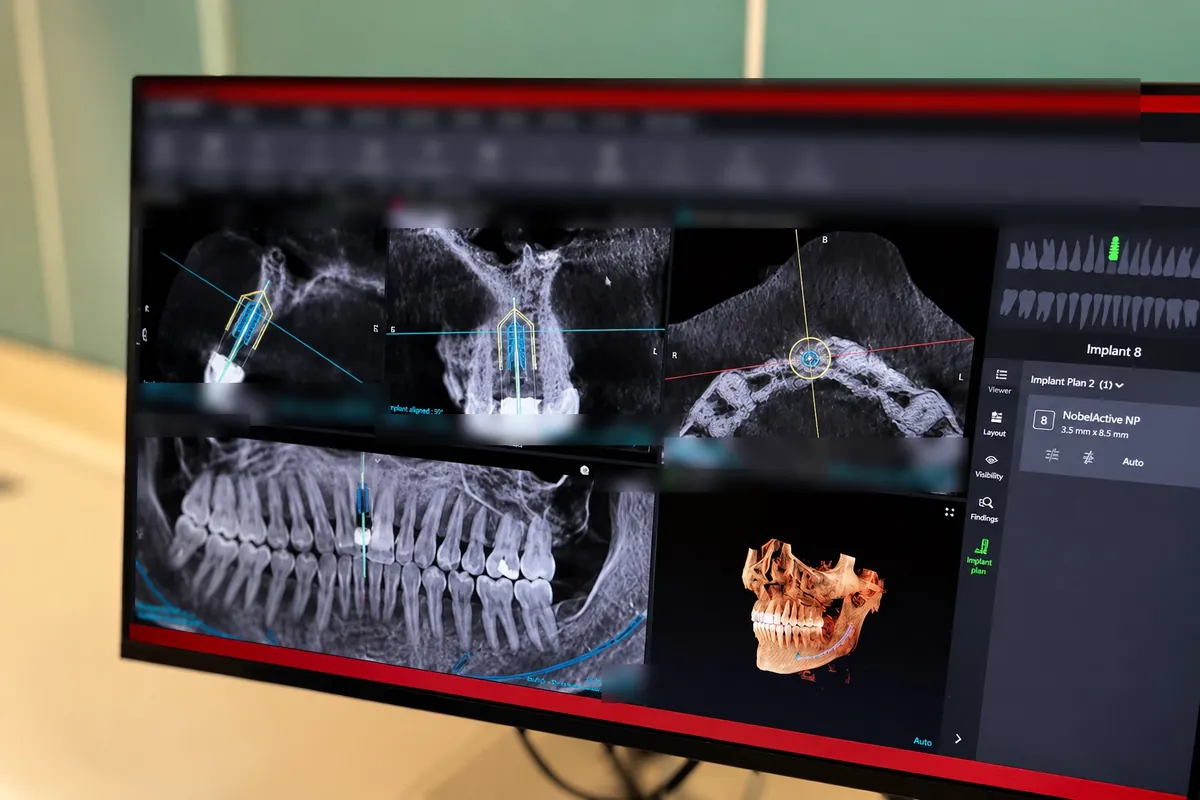
- CBCT 3D imaging. Captures jawbone, sinus, and nerve anatomy in three dimensions. We plan implant position around your actual anatomy, not a two-dimensional approximation.
- Guided surgery software. The CBCT scan drives a digital plan; a printed surgical guide carries that plan into the operatory so the implant lands where it was designed to.
- Intraoral scanners. Replace traditional impression material with a digital scan. Faster, cleaner, and more accurate for crown fit.
- 3D-printed surgical guides. Custom-fabricated for each case from the digital plan.
- IV sedation. Administered by a certified provider, monitored throughout. Used for longer procedures or for patients with significant anxiety.
Ready to Discuss Dental Implants?
Multi-disciplinary care. CBCT 3D imaging included. Same-week appointments.
Multi-disciplinary dental care · Beaverton, OR
18455 SW Alexander St, Suite B, Beaverton, OR 97006 · Near Intel & Orenco Station
Sedation and comfort options
We match the sedation method to the procedure length, your medical history, and your anxiety level. Options include:
- Local anesthesia. Standard with every surgical visit.
- Nitrous oxide. A light inhaled anesthetic that wears off quickly and lets you drive yourself home.
- Oral sedation. A pill taken before the appointment; helpful for moderate anxiety.
- IV sedation. A deeper level of sedation with a certified provider monitoring vitals. Most patients have no clear memory of the procedure afterward.
We discuss the right choice with you at the consultation.
Cost, insurance, and financing
Implant pricing depends on the case. The ranges below are typical for the Beaverton area; your written estimate will reflect your specific anatomy, materials, and any preliminary work.
- Single-tooth implant (implant, abutment, and crown): typically $3,500–$6,000, depending on bone quality, crown material, and whether grafting is required.
- Bone grafting (when needed): typically $400–$2,500 depending on the extent of the graft.
- Full-arch (All-on-4): typically $18,000–$30,000 per arch.
- Insurance. Most dental insurance covers the crown portion of an implant and many plans cover a portion of the surgical phase. We verify benefits before treatment.
- Financing. CareCredit and in-house payment plans are available.
Quoted ranges are typical. Your consultation produces a specific written estimate based on your case.
Recovery and timeline
Most patients are surprised by how routine the recovery feels. The longest part of the timeline is the part you cannot feel — bone fusing to the implant.
- Placement appointment: 1 to 2 hours.
- Initial healing: 5 to 7 days of mild soreness, usually controlled with over-the-counter pain medication.
- Osseointegration (bone fusing to the implant): 3 to 6 months. You wear a temporary during this period when the tooth is visible.
- Crown attachment: a separate appointment after we verify that osseointegration is complete.
- Return to work: most patients return to work the day after surgery.
Your Single-Tooth Implant Journey

Consultation & Imaging

Your Written Plan
Preparation (only if needed)
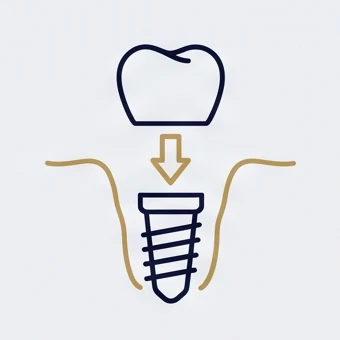
Implant Placement
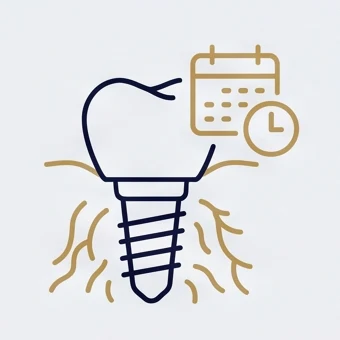
Healing
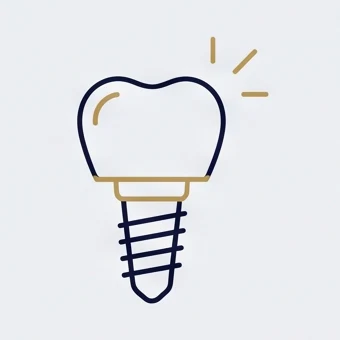
Abutment & Crown
Risks and limitations
Implants are predictable, but no surgical procedure is risk-free. We discuss these openly at consultation.
- Implant failure. Uncommon; published literature reports failure rates in the low single digits, with higher rates in smokers and in patients with uncontrolled diabetes.
- Infection at the surgical site. Uncommon with proper aftercare.
- Sinus or nerve proximity. Mitigated by CBCT planning; this is the main reason we do not place implants without a 3D scan.
- Time commitment. 4 to 9 months total from placement to final crown for most cases.
- Cost. Higher upfront than removable alternatives, though long-term cost can be comparable.
- Candidacy. Not every patient qualifies without preliminary work such as bone grafting or treatment of active gum disease.
Why patients choose Aloha Dental Specialty Center
There are several implant offices in the Beaverton area. A few things distinguish ours.
- A multi-disciplinary team under one roof. Three general dentists place implants within general-practice scope. Our board-certified endodontist, Specialized Endodontic Care, consults on cases involving prior root canals or anatomical complexity. Children are cared for by our pediatric dental team.
- In-house CBCT imaging. You do not need a referral to a separate imaging center for your scan.
- Same-day consultations including CBCT and a written treatment plan.
- IV sedation in-office with a certified provider.
- A local, family-run practice. Not a corporate chain. You see the same doctor at every visit.
Where we are and who we serve
Address: 18455 SW Alexander St, Suite B, Beaverton, OR 97006
Phone: (503) 822-0096
Hours: Monday–Friday 8am–5pm (6pm Thu–Fri), Saturday 8am–2pm, Sunday closed
We see patients from across the Tualatin Valley region:
- Beaverton, Aloha, Hillsboro
- Cedar Hills, Bethany, Tanasbourne, Orenco Station
- Forest Grove, Cornelius
- Tigard, Sherwood, Tualatin
- Lake Oswego and West Linn (a longer drive — patients often combine this with a longer-procedure appointment)
For Beaverton-specific information, see our Beaverton dental implants page.
Before & after
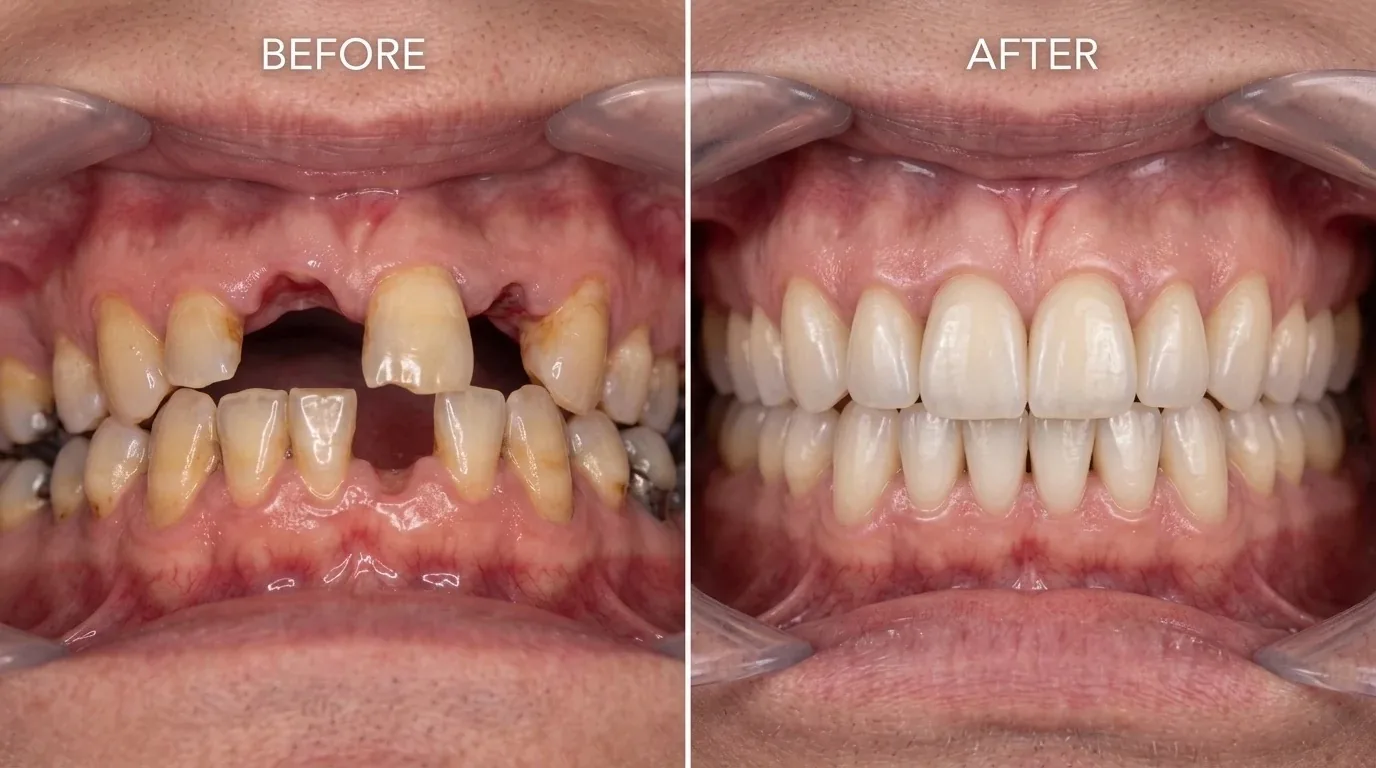
- Individual results vary
- Photos shown with patient consent
Frequently asked questions about dental implants
With proper care, implants can last 20+ years. The crown attached to the implant may need replacement at 10–15 years; the implant itself often lasts a lifetime in healthy patients.
Most patients describe the surgical placement as easier than a tooth extraction. Local anesthesia, optional sedation, and post-procedure pain management make the procedure comfortable.
Most dental plans cover the crown portion (often 50%); some cover a portion of the surgery. We verify your specific coverage before treatment and provide a written estimate.
For most single-tooth cases: 4–6 months total. Faster cases (3–4 months) are possible when bone quality is excellent and no grafting is needed.
Sometimes (called “immediate placement”). Whether it’s right for your case depends on bone quality, infection status, and anatomy — determined at consultation.
A bridge requires grinding down the two adjacent teeth as supports; an implant doesn’t touch your other teeth and preserves the bone.
Adjacent teeth shift into the gap; the opposing tooth may over-erupt; and the underlying jawbone gradually shrinks. This makes future treatment more complex.
Yes — CareCredit and in-house payment plans are available. We discuss options at your consultation.
Schedule your implant consultation
Same-day appointments are often available. Call (503) 822-0096 to schedule a consultation, including CBCT imaging and a written treatment plan, at our Beaverton office.
Related pages:
What Our Beaverton Patients Ask About Dental Implants in Beaverton, OR
At Aloha Dental Specialty Center, patients frequently ask about the timeline, cost, and recovery for Dental Implants in Beaverton, OR. Dr. Walied Eldomiaty personally reviews each case using CBCT 3D cone-beam imaging to develop an individualized treatment plan. Most procedures are completed in one to two visits, with IV sedation, oral sedation, and nitrous oxide available for your comfort. We accept Delta Dental, Cigna, Aetna, MetLife, Guardian, and most PPO plans, with CareCredit 0% financing for 12-24 months. Recovery varies by case complexity — our team provides detailed written aftercare instructions and schedules follow-up visits. Questions? Call (503) 822-0096 — we’re open 8 AM – 5 PM weekdays (until 6 PM Thursday and Friday) and Saturdays 8 AM – 2 PM.
A single dental implant at Aloha Dental Specialty Center typically costs $3,500–$5,500 including the implant post, abutment, and crown, while full-arch All-on-4 restorations range from $18,000–$30,000 per arch. We accept Delta Dental, Cigna, Aetna, and most PPO plans, with CareCredit 0% financing available for 12–24 months. Read our detailed 2026 Dental Implant Cost & Financing Guide for complete pricing and insurance breakdowns.
Many Delta Dental PPO plans cover 50% of implant placement after your deductible. Our billing team verifies benefits before your appointment and handles all claim submissions.
Dental implants have a 95–98% 10-year success rate when placed by an experienced clinician. Dr. Walied Eldomiaty uses CBCT 3D imaging for precision implant placement.
Yes — bone grafting before or during implant placement can rebuild the jawbone needed to support implants. Dr. Walied Eldomiaty provides implant dentistry, coordinating bone grafting and sinus lifts when needed to make implants possible even in complex cases.